Beyond the Blueprint: How to Design for Manufacturability (DfM)

Common Casting Alloys: A Deep Dive into Gray Iron vs. Ductile Iron vs. Steel (Cont.)
2026-04-13
Beyond the Blueprint: How to Design for Manufacturability (DfM) cont
2026-04-27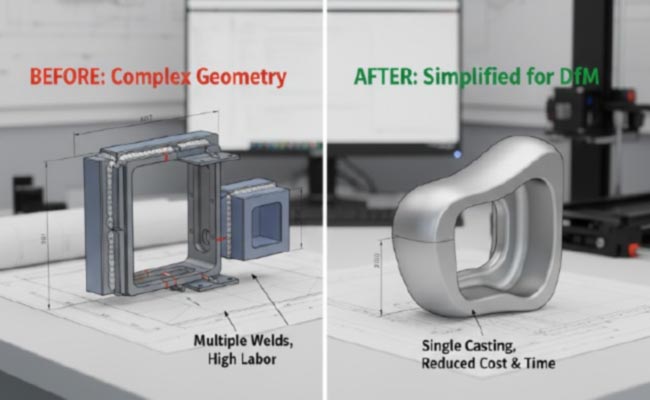
In the world of manufacturing, a brilliant design on paper doesn’t always translate into a brilliant, cost-effective, and easy-to-produce part. This is where Design for Manufacturability (DfM) comes in. DfM is a proactive engineering approach that integrates manufacturing considerations into the product design process. It’s about designing parts not just for function, but for efficient, repeatable, and economical production.
Think of it as looking several steps ahead: how will this part be cast, machined, assembled, and finished? By addressing potential manufacturing challenges during the design phase, you can prevent costly rework, delays, and quality issues down the line.
Let’s explore key principles of DfM and how they can transform your projects.
1. Simplify Part Geometry
The simpler the better. Complex shapes, intricate features, and unnecessary angles often increase tooling costs, extend cycle times, and introduce potential manufacturing defects.
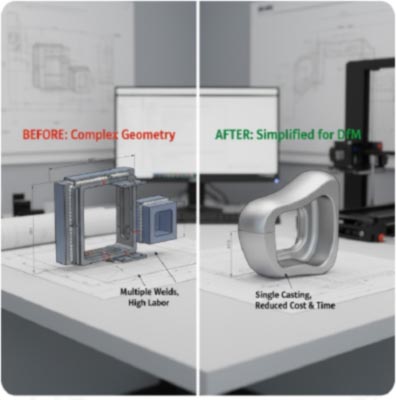
Reduce Part Count: Can multiple components be integrated into a single casting? This eliminates assembly steps, welding, and reduces the potential for tolerance stack-up errors.
Eliminate Unnecessary Features: Every hole, curve, or intricate detail adds complexity. If a feature doesn’t contribute significantly to function or aesthetics, consider removing it.
2. Standardize Features and Tolerances
Consistency is key to efficiency. Using standard features and sensible tolerances can drastically streamline manufacturing.
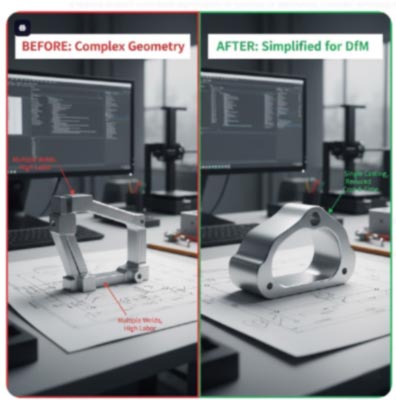
Standard Hole Sizes & Threads: Utilize commonly available drills and taps. Non-standard sizes require custom tooling, adding cost and lead time.
Realistic Tolerances: Tight tolerances are expensive. Only apply them where absolutely critical for function. Looser tolerances are easier to achieve and less prone to scrap.
Uniform Wall Thickness: In casting, uneven wall thicknesses can lead to solidification issues like shrinkage porosity. Strive for consistent wall sections where possible.
3. Consider Material Selection Early
The choice of material isn’t just about strength; it impacts everything from casting temperature and mold design to machinability and heat treatment.
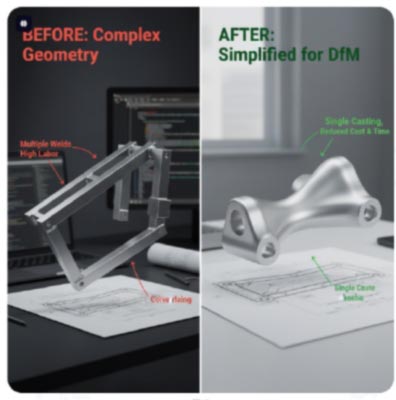
Match Material to Process: Ensure your chosen material is well-suited for the intended manufacturing process (e.g., cast iron for damping, cast steel for high strength).
Availability & Cost: Are there readily available and cost-effective alternatives that meet performance requirements?