Beyond the Blueprint: How to Design for Manufacturability (DfM) cont

Beyond the Blueprint: How to Design for Manufacturability (DfM)
2026-04-20
What is “Draft” and Why Your Casting Design Absolutely Needs It
2026-05-11
4. Design for Tooling and Process Limitations
Every manufacturing process has its unique quirks and limitations. Designing with these in mind from the outset prevents headaches later.
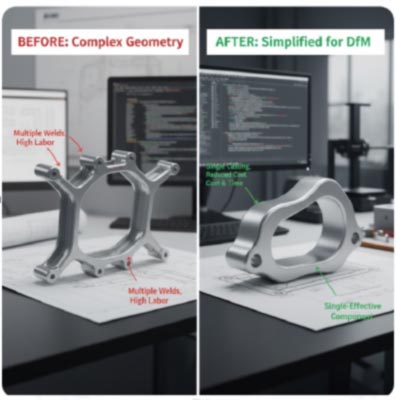
Draft Angles: For castings and forgings, draft angles (a slight taper) are essential to allow the pattern/part to be easily removed from the mold/die. Without them, parts can get stuck or damage the tooling.
Radii vs. Sharp Corners: Sharp internal corners can lead to stress concentrations, cracking, and premature tool wear in casting and machining. Adding generous radii improves material flow and part integrity.
Gating & Risering: Consider how molten metal will flow into a mold (gating) and where extra material will be placed to compensate for shrinkage (risering). Collaborating with your foundry on this can prevent casting defects.
5. Collaborate Early and Often
Perhaps the most crucial aspect of DfM is communication. The design team should engage with manufacturing engineers, tooling experts, and suppliers from the very beginning.
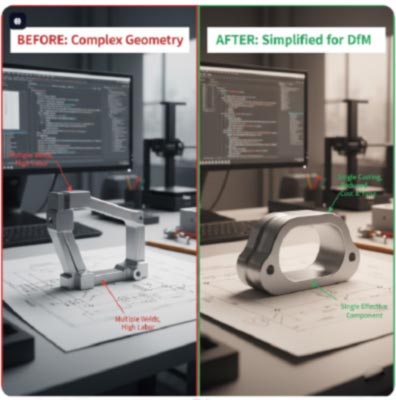
Supplier Feedback: Your casting or forging partner has invaluable experience. They can identify potential issues or suggest simpler alternatives that you might not have considered.
Cross-Functional Teams: Involve representatives from design, manufacturing, quality, and procurement in the initial stages.
The DfM Advantage
Implementing DfM principles isn’t just about saving money; it’s about building a better product. It leads to:
Reduced manufacturing costs
Faster time to market
Improved product quality and reliability
Fewer production delays and rework
Enhanced competitive advantage
By shifting focus from “can we make it?” to “how can we make it best?”, DfM transforms product development from a series of reactive fixes into a streamlined, proactive, and highly efficient process.