Managing Pattern Lifecycle Costs: Repair, Storage, and Replacement Strategies.

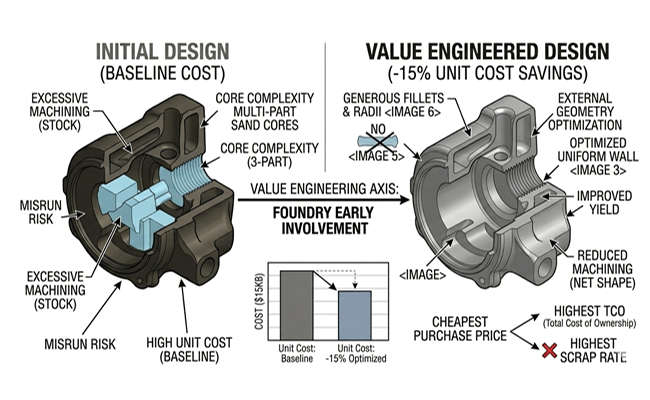
Value Engineering: How Foundry Early Involvement Can Save 15% on Unit Cost.
2026-11-02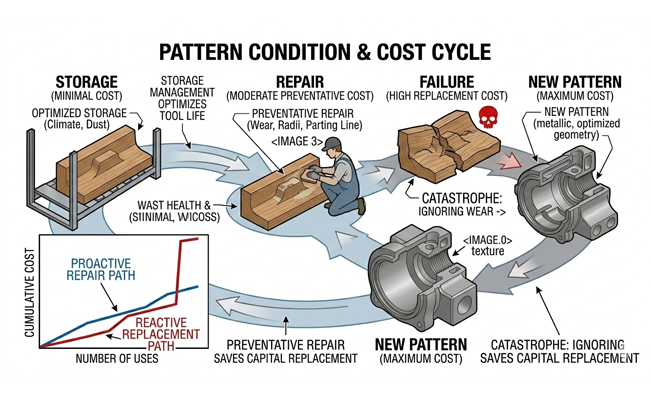
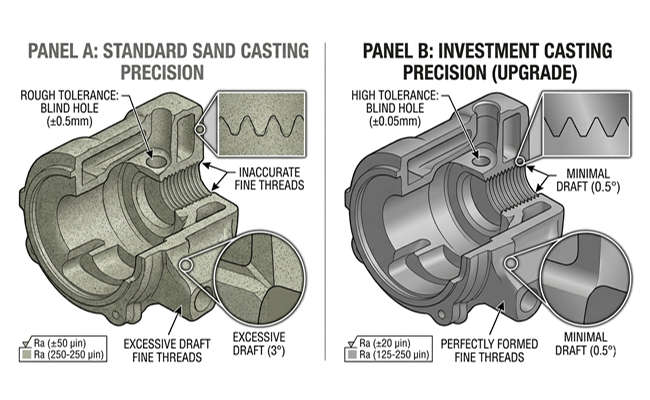
“Pattern Management,” I told my team during a budget meeting, “is about the most unglamorous part of casting, but ignoring it is a quick way to burn capital.” A wooden pattern that we used weekly for gray iron had been running fine—until it wasn’t. Image reference (Pattern Lifecycle Map, initial storage/repair stage). The operator had reported consistent flashing, suggesting the parting line was worn out and radii optimization from image_2.png and draft angles from image_0.png were starting to degrade.
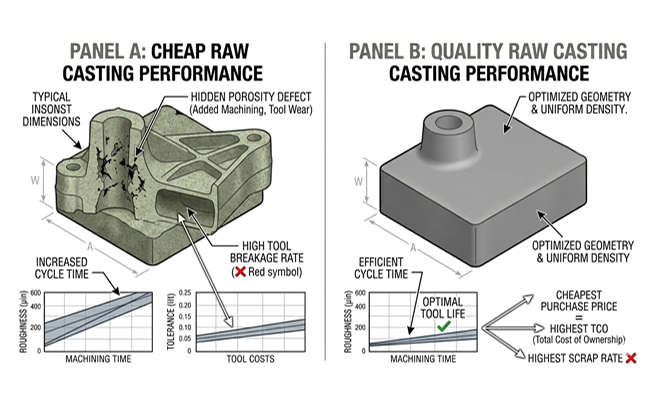
We had two choices. Spend $2,000 on a comprehensive repair, including sanding, filling, and re-establishing the parting line and critical radii from image_2.png and draft from image_0.png. Instead, we ignored it. Next week, the flashing was worse, and the operator reported severe dimensional shift in a deep internal feature. When we sectioned a part, we found that the main pattern segment had warped beyond repair due to improper storage—it had warped like the irregular spiky voids we sometimes see in porosity (Image references image_1.png/image_9.png style spiky porosity shape). We could not fix it. We had to replace it entirely.
The final cost was $15,000 and two weeks of complete downtime. If we had just made that mandatory repair cycle part of our preventive maintenance (Image reference: ‘MODERATE PREVENTATIVE COST’ callout), we would have spent $2,000 instead of $15,000. It’s not just a cost; it’s an investment in repeatable, profitable production. Our mandatory repair cycles, specialized storage racks, and metallic replacement strategies (Image reference: metallic pattern texture image_16.png reference) prevent that massive cost spike, because as the chart shows, a small preventative repair cost prevents the massive, catastrophic replacement spike (Image reference: ‘PROACTIVE REPAIR PATH’ vs. ‘REACTIVE REPLACEMENT PATH’ chart comparison). Secure your tooling lifecycle and optimize the total process for success.