Minimizing Environmental Impact in Foundry Operations

Using Green Sand and Other Sustainable Molding Materials in Steel Casting
2026-07-06
The most common production challenges in the foundry industry.
2026-07-20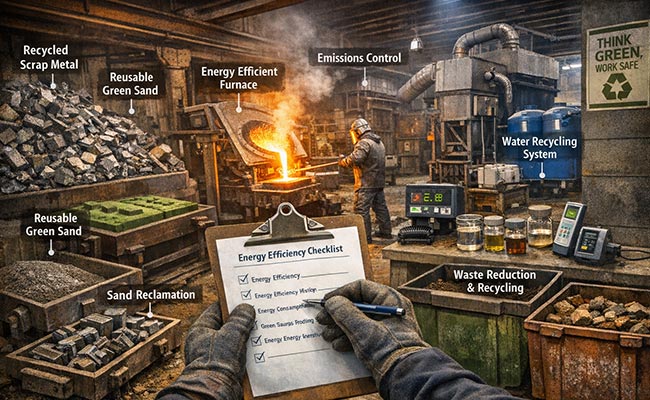
Working in the foundry industry has made me deeply aware of the environmental challenges tied to metal casting. From energy consumption to material waste and air emissions, foundry operations can leave a significant footprint if not managed carefully. Over time, I’ve made it a priority to minimize environmental impact in every phase of our operations—not just because regulations require it, but because it’s the responsible thing to do.
Rethinking Raw Materials
One of the first changes I focused on was the materials we use. I prioritize recycled scrap metal whenever possible, reducing the demand for virgin raw materials and lowering energy consumption in melting. I’ve also worked to incorporate greener molding systems, such as reusable green sand, which reduces waste and allows us to reclaim and recondition sand multiple times before disposal.
By paying attention to material sourcing and reuse, I’ve been able to cut down on landfill waste and improve overall process efficiency.
Improving Energy Efficiency
Melting metal is energy-intensive, and I quickly realized that optimizing this stage has the biggest environmental impact. I’ve invested in more energy-efficient furnaces and closely monitor melt cycles to reduce energy waste. By scheduling production efficiently and minimizing idle time, I lower fuel and electricity consumption.
In addition, I regularly maintain equipment to ensure it runs at peak efficiency. Even small improvements—like better insulation or optimized charge preparation—make a measurable difference over time.
Controlling Emissions and Air Quality
Air emissions are a critical concern in foundry operations. To address this, I rely on proper ventilation systems, dust collectors, and filtration equipment to capture particulate matter and reduce harmful emissions. I monitor air quality metrics closely, ensuring compliance while continuously looking for opportunities to improve performance.
Switching to cleaner binders and low-emission additives has also significantly reduced volatile organic compound (VOC) output. These steps help protect both the environment and the health of our workforce.
Water Conservation and Wastewater Management
Water plays an important role in cooling and dust suppression. I’ve implemented closed-loop water systems to recycle process water rather than discharging it unnecessarily. This reduces both water consumption and contamination risks.
Careful wastewater treatment and regular testing ensure that any discharged water meets environmental standards. I see water stewardship as essential—not only for regulatory compliance but for long-term sustainability.
Sand Reclamation and Waste Reduction
Foundries generate large volumes of used sand and slag. Instead of treating these as waste, I look for opportunities to reclaim and repurpose them. Mechanical and thermal sand reclamation systems allow us to reuse a significant portion of spent sand in new molds.
When materials cannot be reused internally, I explore partnerships that can utilize by-products in construction or other industrial processes. Reducing waste isn’t just environmentally responsible—it also lowers operating costs.
Building a Culture of Sustainability
Minimizing environmental impact isn’t achieved through equipment alone. I actively involve our team in sustainability initiatives by providing training and encouraging innovative ideas from the floor. When employees understand how their daily actions affect energy use and waste generation, meaningful improvements happen naturally.
We track environmental performance metrics and celebrate progress, reinforcing that sustainability is an ongoing commitment rather than a one-time initiative.
Continuous Improvement
What I’ve learned is that sustainability in foundry operations is not a destination—it’s a continuous journey. Regulations evolve, technologies improve, and best practices shift. I stay informed, evaluate new solutions, and remain open to change.
By combining responsible material use, energy efficiency, emission control, water conservation, and waste reduction, I’ve been able to significantly minimize our environmental footprint. More importantly, I’ve seen how sustainable practices strengthen both operational performance and community trust.
In the end, minimizing environmental impact in foundry operations isn’t just about meeting standards—it’s about shaping a more responsible and resilient future for our industry.