Using Green Sand and Other Sustainable Molding Materials in Steel Casting

Beyond the Pour: The Art and Science of a Modern Casting Foundry
2026-06-29
Minimizing Environmental Impact in Foundry Operations
2026-07-13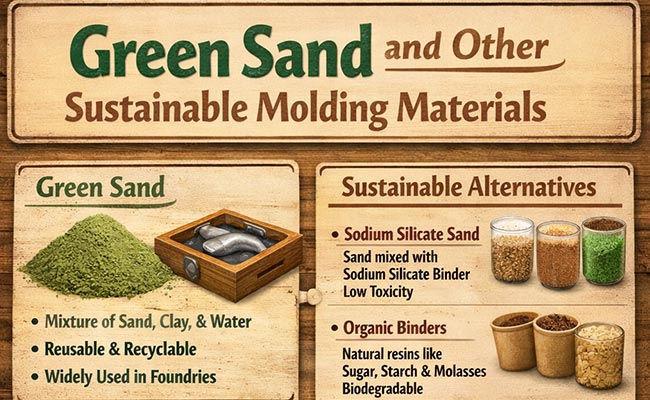
As someone working in steel casting, I’ve seen firsthand how much material, energy, and waste our industry can generate. Over the years, I’ve made a conscious effort to reduce our environmental footprint without compromising quality. One of the most impactful shifts I’ve experienced has been using green sand and other sustainable molding materials in our casting processes.
· My Experience with Green Sand
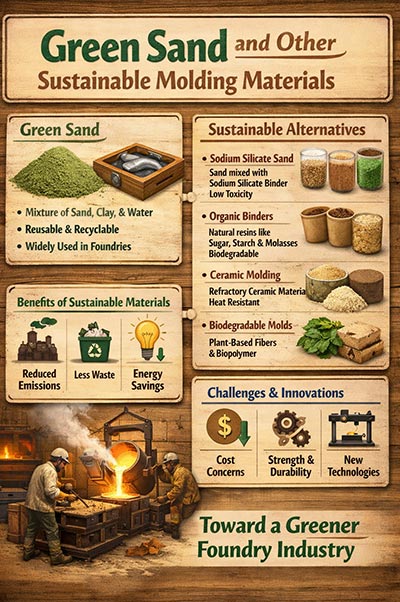
When people hear “green sand,” they often assume it refers to the color. In reality, green sand is named for its moisture content. It’s a mixture of silica sand, clay (usually bentonite), water, and sometimes additives like sea coal. What makes it “green” in the sustainability sense is that it’s reusable.
In my shop, green sand has become a cornerstone of our operations. After a casting is shaken out, we recondition the sand by adjusting moisture and clay content, then cycle it back into production. This significantly reduces the need for new raw sand and cuts down on landfill waste. I’ve found that, when properly managed, green sand delivers consistent mold strength, good collapsibility, and reliable surface finishes for steel components.
· Why Sustainability Matters to Me
Steel casting is energy-intensive. I can’t change the physics of melting steel, but I can rethink the materials I use around it. By choosing sustainable molding systems, I reduce raw material consumption, transportation emissions, and disposal costs.
Sustainability isn’t just about meeting regulations or checking a box. For me, it’s about long-term viability. Customers are increasingly asking about environmental responsibility, and adopting greener practices gives me confidence that we’re building a future-ready foundry.
· Exploring Other Sustainable Molding Materials
While green sand is my primary system, I’ve also explored other alternatives to further reduce environmental impact:
1. Reclaimed Sand Systems
Thermal and mechanical reclamation systems allow me to recover sand from chemically bonded molds. Instead of discarding used sand, I can process and reuse it, lowering both material costs and waste volume.
2. Water-Based Binders
Traditional binders can release volatile organic compounds (VOCs). Transitioning to water-based or low-VOC binder systems has improved our air quality and reduced emissions inside the facility.
3. Bio-Based Binders
I’ve started experimenting with bio-based resins derived from renewable sources. While not yet a complete replacement for every application, they represent a promising direction for certain mold and core production needs.
4. Alternative Aggregates
In some non-critical applications, we’ve tested alternative aggregates to partially replace virgin silica sand. This reduces reliance on mining and diversifies material sourcing.
· Operational Benefits I’ve Noticed
Going green hasn’t meant sacrificing performance. In fact, I’ve noticed several operational improvements:
Lower raw material purchasing costs due to reuse
Reduced waste disposal fees
Improved internal air quality
Stronger alignment with environmentally conscious customers
Maintaining green sand systems does require discipline—moisture control, regular testing, and proper mixing are essential. But once the process is dialed in, the stability is impressive.
· Challenges I’ve Faced
Sustainable materials aren’t a silver bullet. I’ve had to invest in monitoring equipment, train staff on tighter process controls, and occasionally troubleshoot variability in reclaimed materials. Early on, we experienced inconsistencies in mold strength due to poor sand conditioning. That taught me that sustainability must go hand in hand with process control.
I also learned that not every casting is suited to every green alternative. High-temperature steel grades sometimes demand more robust mold properties, and material selection has to balance environmental benefits with technical requirements.
· Looking Ahead
As I look to the future of steel casting, I see sustainability becoming less of an option and more of a standard. I plan to continue refining our green sand system and expanding the use of reclaimed and renewable materials wherever feasible.
For me, using green sand and other sustainable molding materials isn’t just about reducing impact—it’s about evolving as a manufacturer. It’s about proving that heavy industry can innovate responsibly.
And from where I stand, the shift toward greener casting practices isn’t just good for the environment—it’s good business.