The Critical “Why”: Why Your Casting Design Absolutely Needs Draft

What is “Draft” and Why Your Casting Design Absolutely Needs It
2026-05-11
The Unseen Architecture: How Grain Structure Defines Strength in Cast vs. Forged Parts
2026-05-19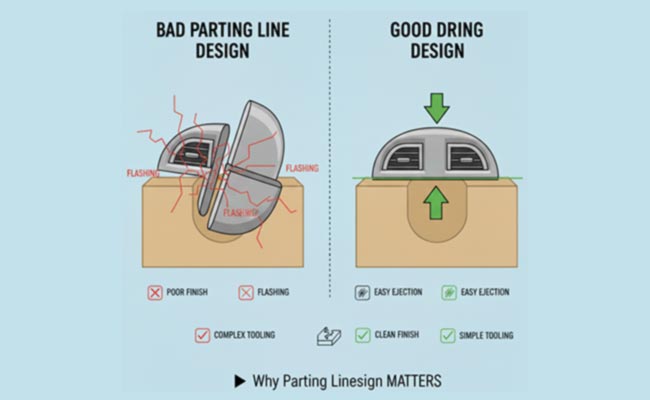
In the intricate world of metal casting, precision and efficiency are paramount. While material selection and structural integrity often grab the spotlight, there’s one subtle yet profoundly important design feature that dictates the success, cost, and quality of your cast part: draft.
If you’ve ever wondered why perfectly vertical walls are a no-go in casting design, or why your foundry keeps asking for tapers, you’re about to find out. Draft isn’t just a suggestion; it’s a fundamental requirement, and here’s why.
What is Draft? A Quick Recap
Before diving into the “why,” let’s quickly define draft. Draft is a slight angular taper applied to the vertical surfaces of a part or pattern. Instead of a wall being 90 degrees to the mold’s parting line, it’s angled slightly, typically by a few degrees. This taper is crucial for allowing the cast part to be cleanly removed from its mold.