The Unseen Architecture: How Grain Structure Defines Strength in Cast vs. Forged Parts

The Critical “Why”: Why Your Casting Design Absolutely Needs Draft
2026-05-11
The Unseen Architecture: How Grain Structure Defines Strength in Cast vs. Forged Parts(CONT.)
2026-05-26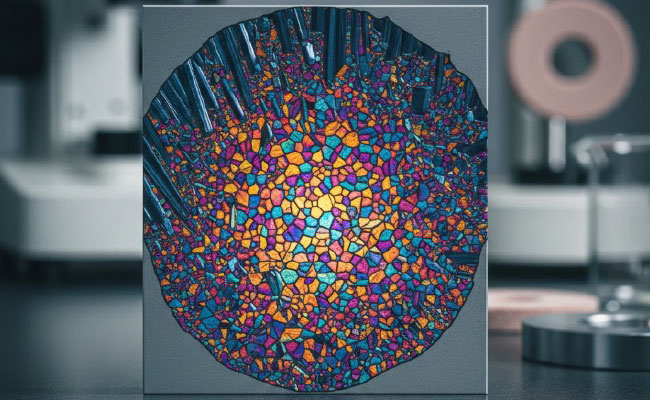
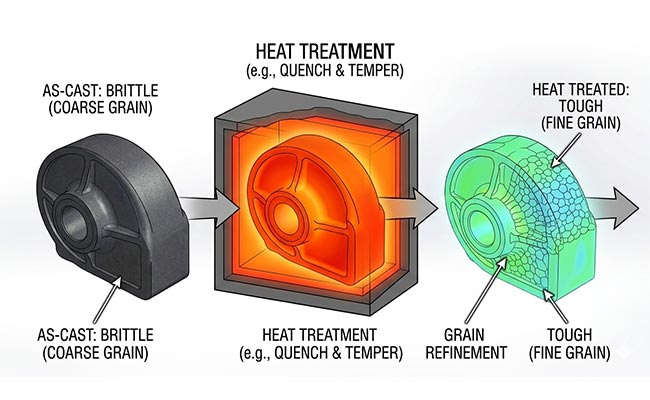
Ever wondered why two metal parts, seemingly identical in shape, can behave so differently under stress? The secret often lies in something invisible to the naked eye: their grain structure. This microscopic architecture, shaped by the manufacturing process, fundamentally determines a metal’s strength, ductility, and resistance to fatigue.
At our factory, we frequently work with both casting and forging, and understanding the metallurgy behind each process is crucial for selecting the right method for a given application. Let’s delve into how these processes create distinct internal structures and why it matters.
The Crystalline Foundation: What are Grains?
Imagine metals as a vast collection of tiny, interlocking crystals. Each of these crystals is a “grain,” and within each grain, atoms are arranged in a specific, repeating pattern. The way these grains form, their size, shape, and orientation, dictate the overall properties of the material.
Casting: The Birth of a Random Grain Structure
When a metal part is cast, molten metal is poured into a mold and allowed to solidify. As the liquid metal cools, crystals begin to nucleate and grow. This growth typically occurs from the mold walls inward, often resulting in a more random, equiaxed (roughly equal-sided) grain structure, or sometimes a columnar structure if cooling is directional.
In a cast part, the grains grow without any external directional force. While cooling rates and alloy composition can influence grain size, the overall orientation tends to be uniform throughout the component.
Implications of a Cast Grain Structure:
Isotropic Properties: Because the grains are generally randomly oriented, a cast part often exhibits similar mechanical properties in all directions (isotropic).
Potential for Defects: During solidification, issues like shrinkage porosity, gas inclusions, or segregation of alloying elements can occur, creating weak points within the structure.
Good for Complex Shapes: Casting excels at creating intricate geometries, including internal cavities, that would be difficult or impossible to achieve with forging.