The Unseen Architecture: How Grain Structure Defines Strength in Cast vs. Forged Parts(CONT.)

The Unseen Architecture: How Grain Structure Defines Strength in Cast vs. Forged Parts
2026-05-19
Why Do Castings Fail? Understanding and Preventing Common Defects
2026-06-01Forging: Directing the Flow, Enhancing the Strength
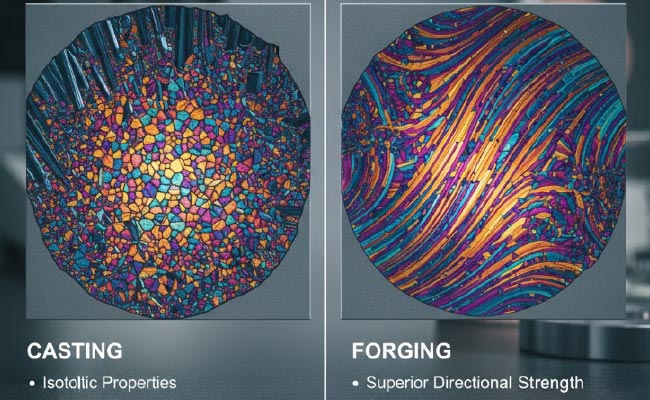
Forging, by contrast, is a deformation process where solid metal is subjected to compressive forces, plastically shaping it into the desired form. This mechanical working fundamentally alters the grain structure. As the metal is hammered or pressed, the existing grains are elongated and oriented along the direction of the deformation, creating a “grain flow” that follows the contours of the part.
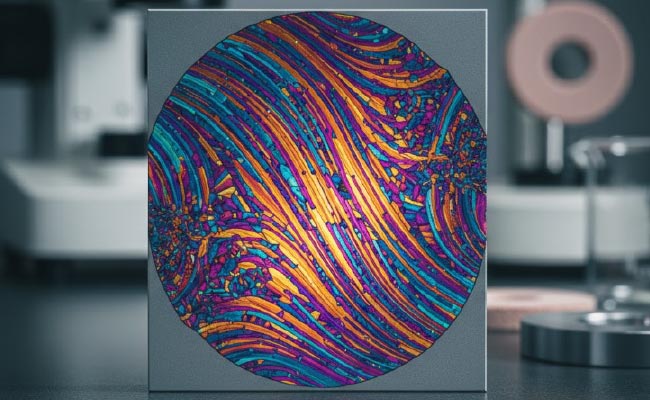
This directed grain flow is a hallmark of forged components. It’s akin to wood grain – significantly stronger when stressed along the grain than across it.
Implications of a Forged Grain Structure:
Anisotropic Properties: The aligned grain flow means that forged parts often have superior strength, toughness, and fatigue resistance in the direction of the grain flow. This is particularly beneficial for components subjected to high, directional stresses.
Refined Grain Size: The mechanical working during forging typically refines the grain size, leading to improved overall mechanical properties and fewer internal defects compared to castings.
Elimination of Porosity: The immense pressure applied during forging can weld shut or reduce internal voids and porosity that might be present in the original billet, further enhancing integrity.
Excellent Fatigue Resistance: Components like connecting rods, crankshafts, and gear teeth, which experience repeated cyclical loads, benefit immensely from the optimized grain flow of forged parts.
Comparing the Microstructures: A Visual Summary
Let’s look at the contrast side-by-side: